Serving Paso Robles, CA and surrounding areas. (805) 257-0239
A sunken or uneven foundation does not always mean a full replacement. We lift settled slabs back to level, fix what caused the sinking, and handle all permits - so your home is stable and your schedule stays intact.
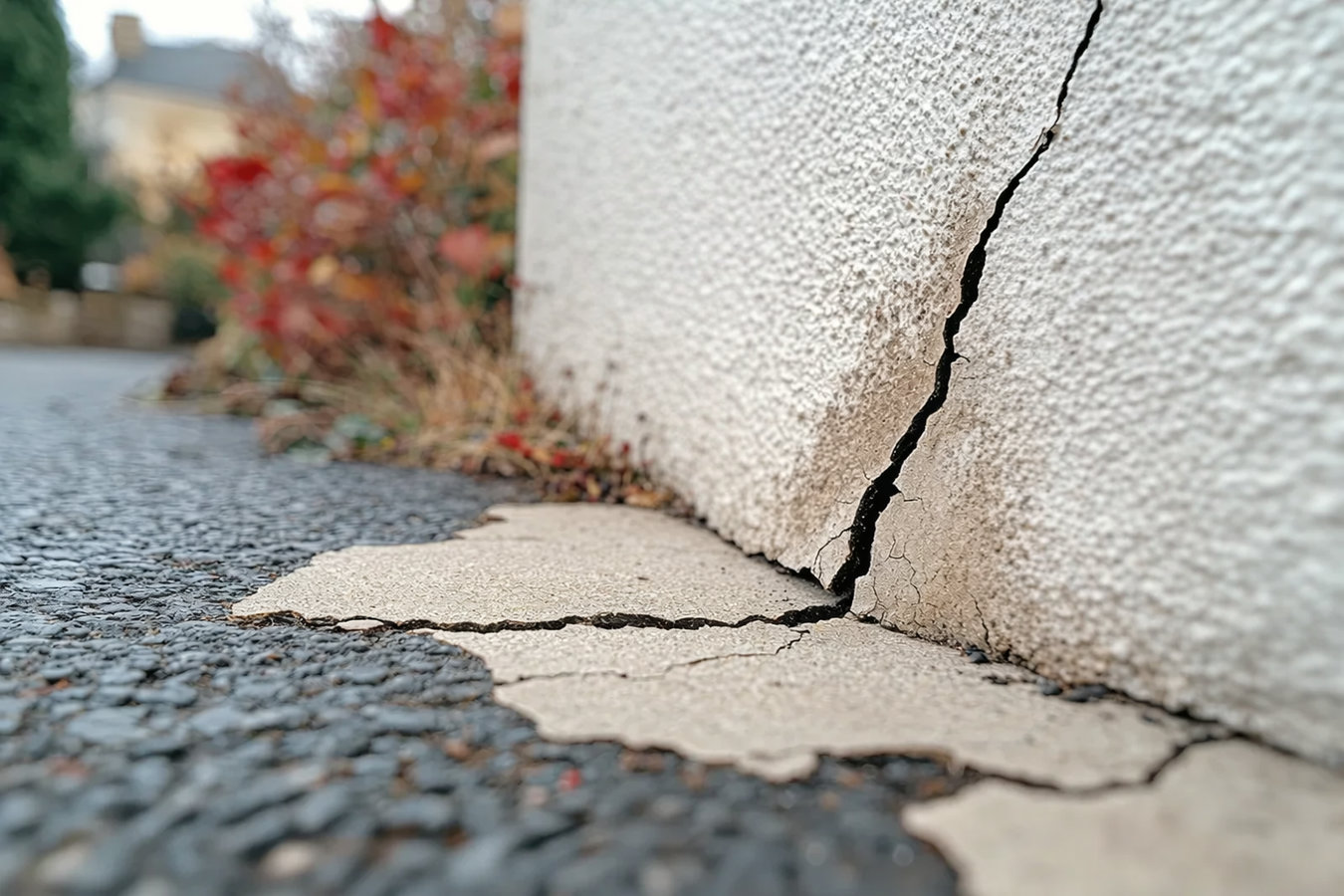
Foundation raising in Paso Robles is the process of pumping material beneath a sunken concrete slab to fill voids and push the slab back to level - most residential jobs take one to two days and cost far less than replacing the slab entirely.
If you have noticed a door that suddenly sticks, a floor that feels hollow underfoot, or a crack that appeared after last winter, those are the early signals that soil has shifted beneath your foundation. In Paso Robles, the clay-heavy soil in the Salinas River Valley expands and contracts with every wet and dry season, and that repeated movement is one of the most common reasons foundations settle here. We drill small access holes through the slab, pump material to fill the voids, and patch the holes once the concrete is level. If your situation also involves new slab work above the existing foundation, our slab foundation building service handles that as a coordinated scope.
We serve homeowners and property owners throughout Paso Robles and the surrounding Central Coast. Every project starts with a free on-site assessment - we look at the slab, check drainage, and explain what we find in plain terms before recommending anything.
If a door that used to swing freely now drags on the floor, or a window that opened easily now jams, your foundation may have shifted. In Paso Robles, this often happens after the first heavy rains of winter, when the clay-heavy soil swells and pushes unevenly against the slab. It is one of the earliest and most noticeable signs that something is moving beneath your home.
Small hairline cracks in a concrete floor are not always serious, but cracks that are wider than a quarter-inch, run diagonally, or have one side higher than the other deserve a closer look. In Paso Robles, the summer heat causes soil to contract sharply, pulling support away from the underside of a slab and leading to cracking. New cracks appearing after a dry summer or wet winter are a pattern worth flagging to a contractor.
Walk slowly across your concrete floor and notice whether it feels solid everywhere. A hollow sound when you tap it, or a slight give underfoot, can mean there is a void beneath the slab where soil has washed or settled away. This is a common finding in older Paso Robles homes where original soil preparation was minimal.
If water collects against the base of your home during or after a rainstorm, that water is working its way under your slab and eroding the soil beneath it. Paso Robles winters can deliver heavy rain in short bursts, and homes without good drainage around the foundation are especially vulnerable. Standing water near the foundation is both a sign of a current problem and a cause of future ones.
We use two proven methods depending on the project. Mudjacking pumps a cement-and-soil slurry beneath the slab to fill voids and restore level - it has been the industry standard for decades and costs less upfront. Polyurethane foam injection uses an expanding two-part foam that hardens quickly, leaves smaller holes, and works well in areas with limited access or where weight on the slab is a concern. Both approaches are far less disruptive than full slab replacement, and both start with an on-site assessment to confirm which method suits your soil conditions and slab type. When a project requires new concrete cutting to open access or remove a damaged section alongside lifting, our concrete cutting service handles that prep work as part of the same scope.
For situations where lifting is not enough - where the slab has cracked beyond repair or the original pour was never structurally sound - our slab foundation building team can replace the slab entirely and address the underlying soil conditions so the new pour holds. All permitted projects include City of Paso Robles Building Division coordination from permit application through final inspection.
Best for larger residential slabs, driveways, and garage floors where cost is a priority and the soil conditions suit a cement-based fill.
Best for tighter access areas, lighter slabs, and projects where fast curing and minimal hole size are important.
Best for homeowners whose slab sank because of poor drainage - lifting without fixing the drainage means the problem comes back.
Best for slabs that are cracked through, structurally compromised, or were originally poured on unprepared soil.
Most of Paso Robles sits on clay-heavy soil, and clay behaves very differently from the sandy or gravelly soils common in other parts of California. Clay swells when it gets wet and shrinks when it dries, and that movement - repeated every single year - is the main reason foundations in this area settle unevenly. The California Geological Survey maps the Salinas River Valley, where Paso Robles sits, as an area with significant expansive soil hazard. On top of that, San Luis Obispo County is an active seismic zone - the 2003 San Simeon earthquake caused real structural damage throughout Paso Robles, and even smaller tremors can loosen the soil beneath a slab and widen existing voids. A contractor who has not worked in this area may not connect those dots when assessing your foundation. Property owners we work with in Atascadero face the same clay soil and seismic conditions and benefit from the same local assessment approach.
The age of your home also matters. Many homes in and around downtown Paso Robles were built in the mid-20th century, before current soil preparation standards were in place. Older slabs were often poured on minimally compacted soil, which means voids are more likely to have formed over the decades - sometimes without any obvious surface sign. Homeowners in Paso Robles with homes built before the 1980s should treat an unusual door or a hollow-sounding floor as reason enough to schedule an inspection, not just something to watch.
We ask a few basic questions - where the problem is, how long you have noticed it, whether there are obvious cracks or sticking doors. We can usually schedule a free on-site visit within a business day or two. You do not need to prepare anything; just be available to walk the property with us.
We walk your property, look at the affected slab, and check for causes - poor drainage, soil erosion, or voids beneath the concrete. This visit typically takes 30 to 60 minutes. You get a written estimate that breaks down what we found and what we recommend before any work is committed to.
For structural foundation work in Paso Robles, we submit a permit application to the City Building Division before work begins. This typically takes a few business days to a week. We handle the paperwork - you do not need to do anything except know that this step is part of a legitimate job.
The crew drills small holes, pumps material beneath the slab, and patches the holes once the concrete is level. Most jobs wrap up in one to two days. We walk you through what was done, point out any drainage recommendations, and let you know when patched areas will be fully cured - typically 24 to 48 hours.
Free on-site estimate. We explain what we find before recommending anything. No pressure.
(805) 257-0239The expansive clay soils in this area behave differently from the sandy soils common elsewhere in California. We know what causes foundations to sink here specifically, and we assess the soil conditions - not just the slab - before recommending a fix. That knowledge means fewer repeat calls.
Structural foundation work in Paso Robles requires a permit, and we manage the entire process with the City Building Division - application, scheduling, and final inspection. You get documentation that the work was done correctly, which matters if you ever sell your home or file an insurance claim.
The American Concrete Institute notes that slab lifting lasts longest when underlying drainage and soil issues are corrected alongside the lifting. We point out drainage problems and soil concerns during the estimate and recommend fixes as part of the scope - not as upsells after the fact.
Every project starts with a site visit and a written estimate that breaks down what we found, what we recommend, and what it costs. The number you agree to is the number on the invoice. If something unexpected comes up during the work, we stop and talk to you before proceeding.
These credentials matter because foundation work is not something most homeowners deal with twice. You want it done right the first time, with documentation to prove it, by a contractor who understands why Paso Robles foundations move in the first place.
Precision saw cutting to open access, remove damaged sections, or create utility trenches - often the first step before lifting or replacement work begins.
Learn MoreFull new slab pours for properties where lifting is no longer the right answer and the foundation needs to be replaced from the ground up.
Learn MorePaso Robles winters are hard on foundations. Locking in your appointment now means the work is done and documented before the wet season starts - call us today to get on the schedule.