Serving Paso Robles, CA and surrounding areas. (805) 257-0239
Cracked, uneven, or missing sidewalk? We build concrete walkways that stay level through Paso Robles clay soil movement and hold up for decades.
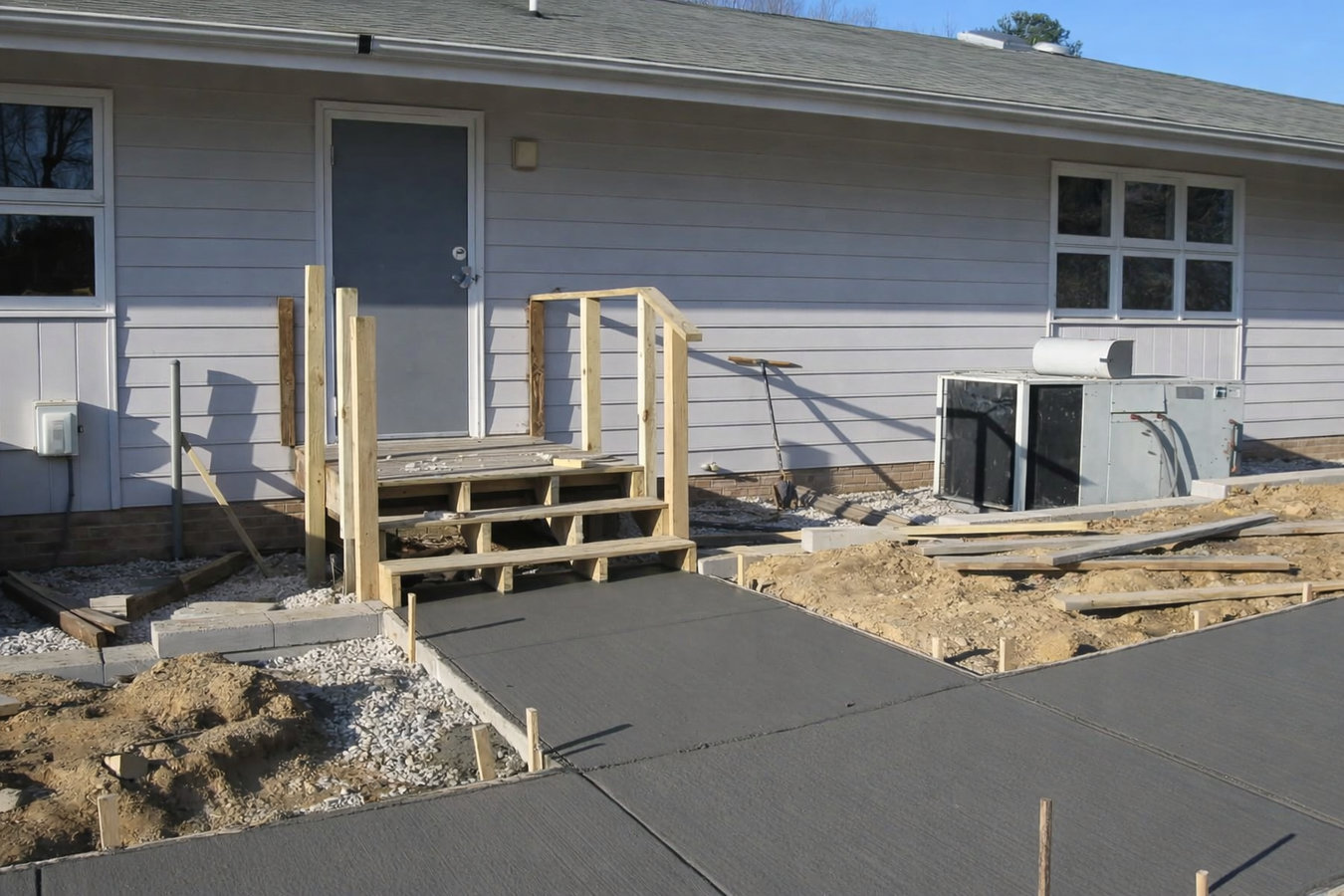
Concrete sidewalk building in Paso Robles involves excavating the area, laying a compacted gravel base to counter local clay soil movement, setting forms, pouring the slab, and finishing the surface - most residential projects are completed in one to two days of active work.
A lot of homeowners in this area have watched sidewalks crack and shift within a few years of being poured. The culprit is almost always inadequate base preparation on top of the clay-heavy soils common throughout Paso Robles and the surrounding area - not the concrete itself. If your current walk is lifting or cracking, or if you do not have one yet and want a safe, properly built entry, getting a written estimate is the right first step.
If you are also looking at upgrading your driveway at the same time, combining a sidewalk project with concrete driveway building can reduce overall mobilization costs and give your property a consistent, finished look from the street to the front door.
If one slab has risen above the one next to it - even by half an inch - it is a tripping hazard and a liability. This kind of uneven settling is especially common in Paso Robles because the clay-heavy soil shifts with the wet and dry seasons, pushing slabs up from below. Once a section has moved significantly, patching the surface will not fix the underlying problem.
Hairline cracks in concrete are normal and usually harmless. But if you can fit the tip of your finger into a crack, or if you have noticed a crack getting longer over the past year, the structural integrity of that section is compromised. In Paso Robles, the combination of hot summers and clay soil movement accelerates this kind of damage, and waiting makes the repair more expensive.
A properly built sidewalk is sloped slightly so water runs off to the side rather than sitting on top. If you notice puddles forming on your walk after rain or after watering your yard, the surface has either settled unevenly or was not graded correctly when it was poured. Standing water speeds up surface deterioration and makes the walk slippery.
When the top layer of concrete starts to peel away in flakes or the surface looks pitted and rough, the concrete is breaking down from the surface inward. This is often a sign of a poor original pour - concrete that was too wet, finished too early, or not cured properly. Once this process starts, it does not stop on its own, and a new pour is more cost-effective than repeated patching.
We build new sidewalks, replace existing ones, and handle driveway apron connections and front entry walks. Standard residential sidewalks are poured four inches thick with a broom finish for slip resistance. If vehicles will ever cross the walk - at a driveway transition - we pour at least six inches to handle the weight without cracking. We also offer decorative options: integral color, stamped patterns, and textured finishes are available for homeowners who want more than plain gray.
For projects that connect a new sidewalk to an upgraded driveway or front entry, we can coordinate the work with our garage floor concrete crews so the surfaces match in finish and elevation. We also offer concrete driveway building as a standalone service for homeowners who want a complete front-of-property upgrade in a single project.
Suitable for properties with gravel, dirt, or no walkway that need a permanent poured concrete path.
For homeowners with cracked, shifted, or deteriorated existing concrete that needs full removal and repour.
Works well for connecting the driveway to the front door with a continuous, level concrete surface.
The standard finish for residential walkways - slightly textured for slip resistance in wet conditions.
For homeowners who want a decorative finish that complements their home exterior or landscaping.
Ideal for homeowners doing multiple pours at once to reduce mobilization cost and match finishes.
Paso Robles soil is one of the main reasons sidewalks here crack and shift faster than homeowners expect. The clay content in the ground around much of the city swells during the wet season and shrinks back in the dry summer heat - that repeated movement pushes slabs up from below and causes them to crack at the edges. The right response is not thicker concrete on top, but proper base preparation underneath: excavating deep enough, compacting the subgrade, and laying the right depth of gravel to buffer the soil movement. Contractors who skip or rush this step are setting their customers up for early repairs.
Summer scheduling also matters here more than in most markets. Paso Robles regularly sees temperatures above 100 degrees Fahrenheit, and pouring concrete in intense heat causes the surface to dry too fast - weakening it from the inside out. We schedule summer pours for early morning and take steps to keep the fresh concrete protected from the heat during curing. Homeowners in Grover Beach and Arroyo Grande deal with similar coastal-area permitting requirements and soil considerations, and our crews work regularly throughout the region.
Tell us the length of the walk and whether you have old concrete to remove. We will ask a few questions and schedule a site visit to measure and assess the ground conditions. You will receive a written estimate that breaks out demolition, base prep, and the pour. We respond within one business day.
If your sidewalk connects to a city street or runs along your property line, we handle the permit application with the City of Paso Robles Public Works Department before any work begins. This typically adds about a week to the timeline - and it means the finished work is inspected and on record when you sell the home.
On the first day, the crew marks out the area, removes old concrete or vegetation, and excavates to the right depth. We compact the subgrade and lay a gravel base sized for local soil conditions - this step is not skippable on clay soil, and we do not rush it.
We set the forms, pour the concrete, apply the finish texture, and cut the control joints. You can walk on the surface in 24 to 48 hours. If a permit was pulled, we coordinate the city inspector visit. Before we leave, we walk the finished sidewalk with you and confirm anything you want to know about the curing period.
No pressure, no obligation. We come out, look at your site, and give you a clear price before you commit to anything.
(805) 257-0239We excavate to the correct depth for Paso Robles soil conditions, compact the subgrade, and lay the gravel base your slab needs to stay level. This is the step most homeowners never see but feel years later - and it is where we do not cut corners.
We manage the permit process with the City of Paso Robles Public Works Department from application to final inspection. You do not have to navigate city requirements yourself - and when the job is done, the work is documented and on record.
Pouring concrete during a Paso Robles summer afternoon weakens the slab. We schedule every pour for early morning in hot weather and take steps to protect the fresh concrete from drying too fast. See the Portland Cement Association for guidance on hot-weather concrete placement.
A standard foot-traffic sidewalk gets poured at four inches thick. Any section that a vehicle will cross - at a driveway apron or garage entry - gets at least six inches. We ask about how the walk will be used before we specify the mix and thickness, so you are not paying for a slab that cracks under the first delivery truck that crosses it.
Every sidewalk we pour in Paso Robles is permitted, built on a properly prepared base, and finished with a broom texture that sheds water and stays safe underfoot. That combination is what gives you a walk that holds up through the soil movement, heat, and winter rains this area delivers every year.
Confirm any California contractor license on the California Contractors State License Board before hiring. Check American Concrete Institute resources for residential flatwork standards.
Pair your new walkway with a durable garage floor pour designed to handle vehicle weight and local temperature swings.
Learn MoreUpgrade the full front approach - driveway and sidewalk together for a cohesive, finished look and lower mobilization cost.
Learn MoreFall is the best time to pour in Paso Robles - contact us now before the rainy season books up our schedule.