Retaining Walls & Concrete Masonry
Strong, durable walls that hold back soil, prevent erosion, and add functional beauty to your property.
More Than Just Walls
Retaining walls do important work on sloped properties. They hold back soil to create level areas for patios, gardens, or driveways. They prevent erosion that would otherwise wash away your landscaping. They protect foundations from soil pressure and water damage. They turn unusable hillsides into functional outdoor spaces. When designed and built correctly, they last for decades while making your property more usable and valuable.
In Paso Robles, CA, many properties have slopes that create drainage challenges or limit usable space. A well-built retaining wall solves these problems. Whether you need a short decorative wall for a raised garden bed or a tall structural wall to support a driveway, the principles are the same. The wall must resist soil pressure, drain water properly, and sit on a solid foundation that won't settle or shift.
We build retaining walls using concrete, concrete block, and natural stone. Each material has advantages depending on your needs, budget, and aesthetic preferences. Poured concrete walls offer maximum strength for challenging sites. Concrete block walls combine strength with a finished appearance and easier construction. Stone walls provide natural beauty with excellent durability. We help you choose the right material and design for your specific situation.
Design and Engineering
What Makes a Wall Stand
A retaining wall fights constant pressure from the soil behind it. Gravity pulls the soil downward and outward. Water adds weight and pressure. Freeze-thaw cycles create additional stress in winter. The wall must resist all these forces without leaning, cracking, or failing. This requires proper engineering from the start.
Height matters significantly. Walls under 4 feet typically don't require engineered plans, though they still need proper construction. Taller walls usually require engineering and permits. The taller the wall, the more critical proper design becomes. Here are the key factors we evaluate:
- Soil type and stability behind and below the wall
- Slope of the land and amount of soil being retained
- Drainage patterns and water management needs
- Loads above the wall, like driveways or structures
- Local building codes and setback requirements
Drainage Is Critical
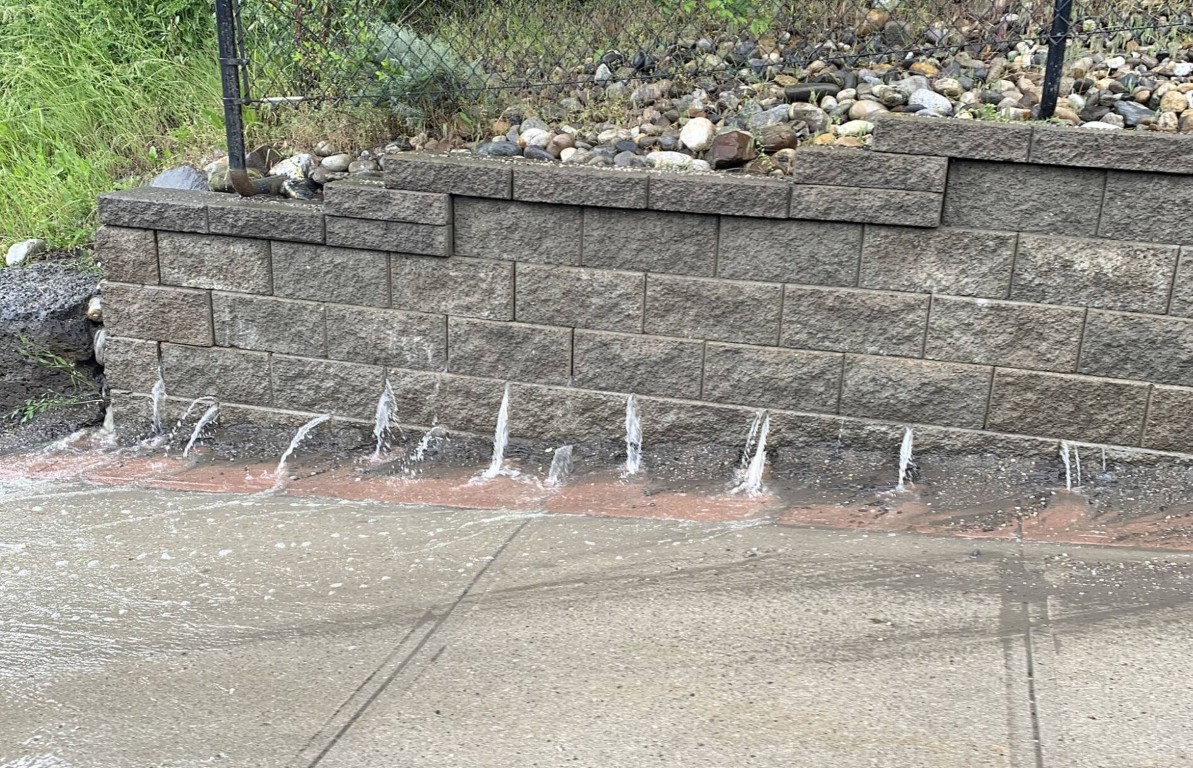
Water is the biggest threat to retaining walls. When water saturates the soil behind a wall, it adds tremendous weight and pressure. Without proper drainage, even well-built walls can fail. We install drainage systems behind every retaining wall we build. Perforated drain pipes collect water at the base. Gravel backfill allows water to flow freely to the drains. Weep holes provide additional drainage through the wall face. These systems keep water from building up and compromising the wall's stability.
Construction Process
Every retaining wall starts with excavation and foundation preparation. We dig down to stable soil and create a level base. For taller walls, we pour a concrete footing that extends below the frost line and provides a solid foundation. The footing width depends on the wall height and soil conditions, but it's typically at least as wide as the wall is tall.
For poured concrete walls, we build forms, install reinforcing steel, and pour concrete in one continuous operation. The concrete mix is designed for structural applications with adequate strength to resist soil pressure. We work systematically to avoid cold joints and ensure uniform strength throughout the wall. Proper curing is essential for maximum strength.
Block walls go up course by course with mortar joints between each block. We use reinforcing steel vertically through the block cores and horizontally in every few courses. We fill the cores with concrete to create a solid, monolithic structure. The result is strong, durable, and more economical than poured concrete for many applications.
Behind the wall, we install the drainage system before backfilling. Filter fabric wraps the drain pipe to prevent soil from clogging it. Clean gravel provides a drainage layer. We backfill carefully in layers to avoid putting sudden stress on the new wall. Once the wall has cured and backfilling is complete, you have a permanent structure that will serve your property for decades. For complementary hardscaping, explore our concrete patio and walkway services.